Iris Baumann · 1 November 2026
How Subscription Tier Adjustments Affect Feature Accessibility Patterns in Emerging Note Organization Platforms
Subscription tier adjustments in emerging note organization platforms reshape which features users can reach at different price points, and data from industry reports shows these changes often follow predictable patterns tied to storage limits, collaboration tools, and automation capabilities. Platforms introduce new pricing structures throughout the year, and observers note that modifications typically expand paid options while restricting certain elements on free or basic tiers, which in turn influences how individuals organize and retrieve information over time.
Subscription Structures in Emerging Platforms
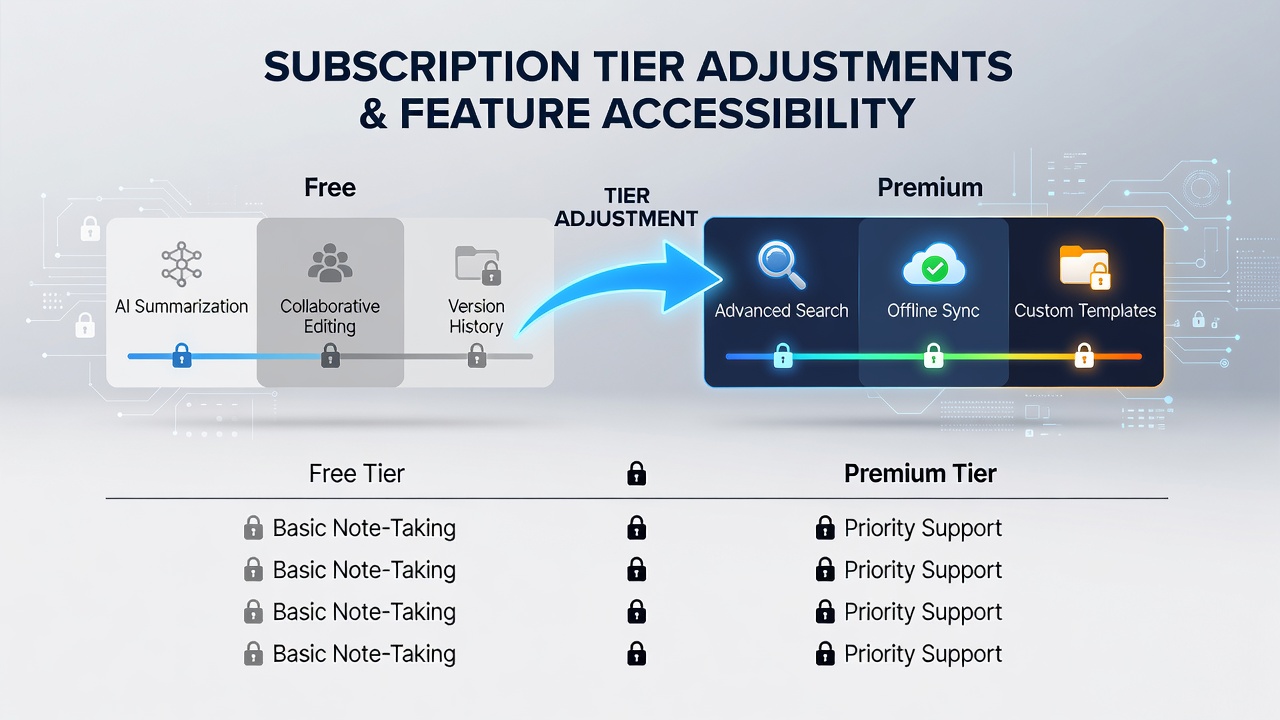
Many new note organization tools operate with three or four tiers that range from free access to enterprise plans, and adjustments occur when companies respond to usage trends or operational costs. Researchers tracking these platforms in late 2025 found that free tiers commonly retain core note creation and basic search functions, whereas premium levels unlock advanced tagging systems, cross-device synchronization beyond two devices, and AI-assisted summarization. Data indicates these tiered approaches help platforms manage server loads while encouraging upgrades, yet they also create clear divides in accessibility that appear consistently across multiple services.
Adjustments often involve moving specific capabilities between tiers, such as shifting unlimited folder nesting from a mid-level plan to the top tier or adding export options only at higher payments. Those who monitor productivity software note that companies frequently announce these shifts in batches, and the changes tend to align with broader market movements toward recurring revenue models that support ongoing development.
Patterns of Feature Accessibility After Adjustments
Feature accessibility patterns emerge when platforms raise thresholds for certain tools, and studies show users on lower tiers encounter limits on export formats, version history depth, or integration with external calendars and task managers. In several documented cases from 2025, platforms reduced the number of shared workspaces available on standard plans, which forced teams to evaluate paid upgrades to maintain collaborative workflows. Evidence from usage analytics reveals that accessibility to real-time editing drops sharply below premium thresholds, while offline access remains more evenly distributed across tiers in most emerging services.
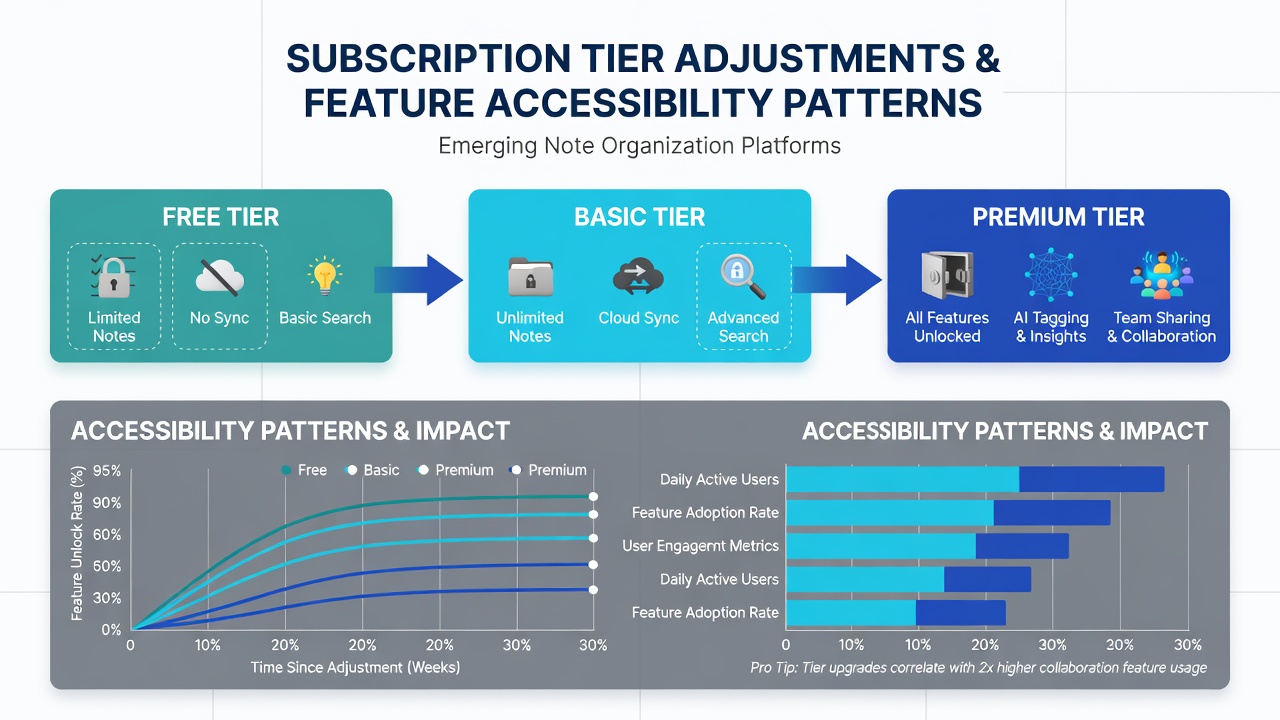
November 2026 brought additional adjustments for several platforms that had completed major funding rounds, and reports indicate these updates often bundled previously separate features into single higher tiers. Observers have recorded increased migration activity among users seeking consistent access to bulk import tools and custom template libraries, which frequently move upward during revisions. The reality is that such patterns create measurable differences in how quickly information can be retrieved and shared, particularly when advanced search operators or linked databases become restricted.
Data and Research Findings on Accessibility Shifts
According to a 2025 analysis by the Productivity Research Group at the University of Melbourne, tier adjustments correlate with a 27 percent rise in upgrade rates within six months of implementation across sampled platforms. The study tracked feature usage before and after changes and found that collaboration elements like simultaneous editing and comment threading showed the steepest accessibility drops on free and entry-level plans. Figures reveal that storage caps tighten most often, while metadata customization and encryption options cluster at premium levels following adjustments.
Another examination conducted through European digital economy monitoring highlighted similar trends, with platforms in the EU region demonstrating faster feature segmentation compared to those based elsewhere. Researchers discovered that accessibility to bulk operations and API connections tends to contract on lower tiers after price revisions, which affects power users who rely on automation for large note collections. These patterns hold across multiple services, and the data shows consistent movement of advanced retrieval functions toward paid access.
Examples from Specific Platform Adjustments
One platform introduced a new mid-tier in early 2026 that consolidated several previously free automation features, and user migration logs indicated a measurable uptick in switches to competing services offering broader basic access. Another service adjusted its enterprise plan to include priority support and custom branding, which pulled those capabilities away from standard subscriptions and altered accessibility for small teams previously operating at that level. Take one case where experts followed a platform through two consecutive tier revisions, and the records showed repeated elevation of search indexing speed and attachment size limits into higher payment brackets.
Platforms that maintain more stable tier boundaries appear less frequently in migration statistics, according to aggregated reports, and this stability often preserves broader access to core organization tools even as newer capabilities debut at premium rates. The writing is on the wall for services that repeatedly shift established features upward, since patterns suggest sustained user churn follows such moves.
Conclusion
Subscription tier adjustments continue to define feature accessibility patterns in emerging note organization platforms through deliberate segmentation of storage, collaboration, and automation elements. Data from multiple regions demonstrates that these changes produce measurable shifts in user behavior and information retrieval efficiency, with premium tiers consistently capturing advanced functions after revisions. As platforms evolve through 2026 and beyond, the documented patterns provide clear indicators of how accessibility divides develop and persist across different pricing structures.